

Table of Contents
Introduction
When learning English, understanding the subtle differences between words can greatly impact how well you communicate. Two words that are often confused are empathy and sympathy. While they relate to feelings and emotions, they are used in different situations.
In this post, we will explore the meanings of these two words, provide examples, and give you some tips on how to use them correctly in English conversations.
If you are in a hurry, here is a concise definition of the two terms: Empathy means sharing and understanding another person’s feelings, while sympathy means acknowledging their emotions without sharing them. Empathy creates a closer emotional connection, while sympathy offers support from a distance.
Defining Empathy and Sympathy
To understand the difference between empathy and sympathy, here are concise definitions of the two concepts:
What is Empathy?
Empathy is the ability to understand and share the feelings of another person. When you experience empathy, you put yourself in someone else’s shoes and imagine what it’s like to be in their situation. This helps you connect with their emotions and understand what they are going through.
The word empathy comes from the Greek word empatheia, which means “passion” or “state of emotion.” This helps explain why empathy is more about feeling with someone, rather than just recognizing their feelings.
Example of Empathy:
- “When I heard about her difficult situation, I truly understood how she felt. I could imagine the sadness she must have been experiencing.”
- This is an example of empathy because the speaker is sharing the emotional experience.
What is Sympathy?
Sympathy, on the other hand, refers to feelings of pity or sorrow for someone else’s misfortune. When you express sympathy, you acknowledge someone’s pain and may feel compassion for them, but you don’t necessarily share their emotional experience.
The word sympathy comes from the Greek sympatheia, meaning “feeling together.” However, in modern English, sympathy means feeling for someone rather than sharing the same emotion.
Example of Sympathy:
- “I’m sorry to hear that you lost your job. That must be really hard for you.”
- This is an example of sympathy because the speaker is acknowledging the other person’s pain but doesn’t experience the same emotions.
The Difference Between Empathy and Sympathy
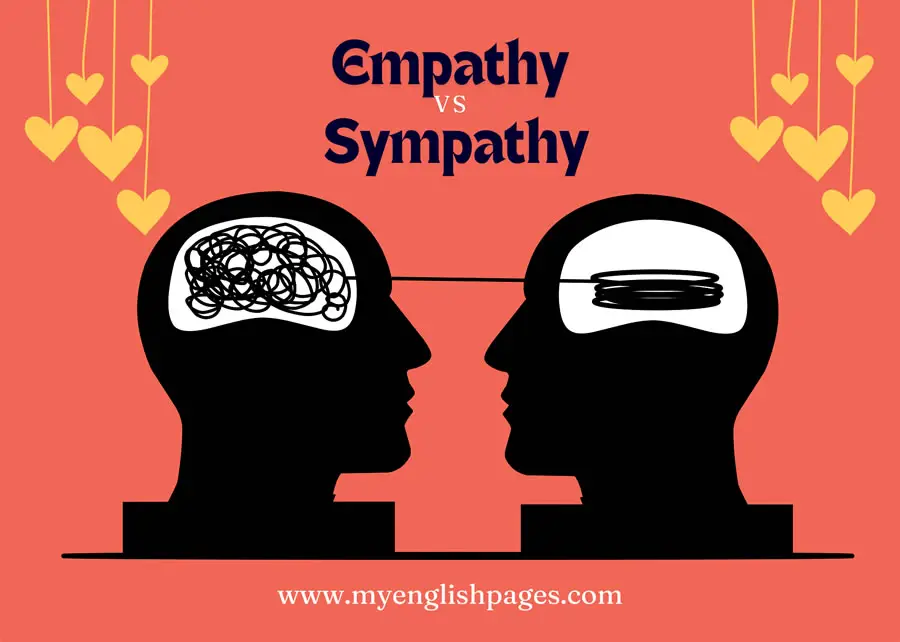
What are the key differences between empathy and sympathy?
It’s easy to see why these two words are often confused; both are associated with feelings. However, the key difference is that empathy involves feeling with someone, while sympathy involves feeling for someone.
- Empathy: You can imagine being in the other person’s situation and feel their emotions.
- Sympathy: You recognize that the other person is in pain, but you do not necessarily share the same emotional experience.
A Simple Metaphor:
Think of it this way:
- Empathy is like being in the same storm as someone else, feeling the same wind and rain.
- Sympathy is standing on the shore and watching the storm from afar, recognizing how difficult it must be for the person in the storm.
Examples in Context
Let’s look at how these words are used in real-life conversations:
Empathy Example:
- “After she explained how stressful her job was, I really felt her frustration. I could relate to the overwhelming pressure she was dealing with.”
- In this sentence, the speaker is experiencing empathy because they share the emotional experience.
Sympathy Example:
- “He told me about his struggles, and while I couldn’t fully understand what he was going through, I felt sorry for him.”
- Here, the speaker expresses sympathy because they feel compassion, but they don’t share the same feelings.
How to Use Empathy and Sympathy in Sentences
Knowing when and how to use empathy and sympathy can help you express yourself more clearly in English. Here are a few tips:
- Empathy is often used when you are able to relate to someone’s emotions because you’ve experienced something similar or you can imagine how they feel.
- Sympathy is used when you want to express compassion or support, but you are not personally experiencing the same emotion.
Example Sentences:
- Empathy: “I can imagine how difficult it must be to move to a new country and leave your family behind. I went through something similar last year.”
- Sympathy: “I’m really sorry to hear about your loss.
For more tips on how to respond to bad news, explore our detailed guide on responding to both good and bad news.
Related Vocabulary
To enrich your understanding, here are some related words that often appear alongside empathy and sympathy:
- Compassion: A deep awareness of and sympathy for another’s suffering. Compassion is often shown through actions.
- Pity: Feeling sorrow for someone else, usually from a position of superiority.
- Understanding: The ability to comprehend and make sense of another person’s feelings or situation.
Practice Exercise: Empathy or Sympathy?
Let’s practice! Read the following sentences and decide whether empathy or sympathy is being expressed:
- “I’m sorry that you’re going through this. I hope things get better soon.”
- “After hearing about his financial struggles, I really understood how hard it must be to live paycheck to paycheck.”
- “She told me about her anxiety, and I could feel the weight of her stress.”
- “I can’t imagine how difficult it must be to lose a loved one. Please let me know if there’s anything I can do to help.”
- “When she shared her story about growing up in poverty, I couldn’t help but feel sympathy for her situation.”
Summary
Here’s a table that summarizes the key difference between empathy and sympathy:
| Aspect | Empathy | Sympathy |
|---|---|---|
| Definition | The ability to understand and share the feelings of others. | Feeling compassion or sorrow for someone else’s misfortune. |
| Emotional Connection | Feeling with someone (you share their emotions). | Feeling for someone (you recognize their emotions). |
| Perspective | Putting yourself in another person’s shoes. | Acknowledging someone’s pain from an outside perspective. |
| Response | You deeply relate to the other person’s experience. | You offer comfort or support without fully sharing the feelings. |
| Example Sentence | “I know how it feels; I’ve been through something similar.” | “I’m sorry for your loss; let me know if you need anything.” |
| Usage Context | Used when you have a personal or relatable understanding of someone’s feelings. | Used when you want to express care or concern without necessarily sharing the same experience. |
Conclusion
Understanding the difference between empathy and sympathy can help you express your feelings more accurately in English. Empathy involves feeling with someone and sharing their emotions, while sympathy is about feeling for someone and showing compassion without experiencing their feelings. Both are important parts of communication, especially when supporting friends, family, or colleagues.
Additional Resources
If you want to learn more, check out these related posts: