

Topics for English Language Learners: Bleak House by Charles Dickens
Table of Contents
Introduction
This Topic hub is designed for ESL and EFL students and teachers. It provides resources, vocabulary, classroom activities, and cultural background related to:
→ Bleak House by Charles Dickens
These hubs serve two purposes:
- For learners – to practice English through engaging materials (reading, vocabulary, discussion, writing).
- For teachers – to find ready-to-use classroom resources and activities connected to literature and culture.
You’ll find in this ESL and EFL Topic: quick overviews, language focus, activities, internal links, external links, and much more.
Bleak House by Charles Dickens
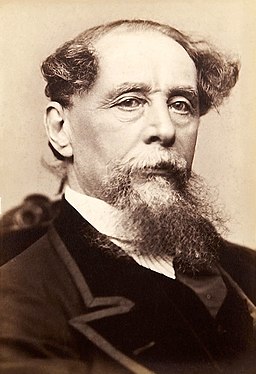
1. About Charles Dickens
Charles John Huffam Dickens (1812–1870) was the most popular English novelist of the Victorian era. He created some of English literature’s most iconic characters, such as Oliver Twist, Ebenezer Scrooge, and David Copperfield. His works often highlight social injustice, poverty, and the struggles of the poor in 19th-century England.
2. About the novel
Bleak House (1853) is one of Dickens’s most complex and important novels. The story follows the long legal case of Jarndyce and Jarndyce, a court dispute over a large inheritance. The novel explores the destructive effects of a slow and corrupt legal system, while also weaving in romance, mystery, and social criticism.
3. Bleak House Summary
The novel (1852–1853) follows the long-running legal case of Jarndyce and Jarndyce, a lawsuit over a contested inheritance that drags on for years in England’s Court of Chancery. At the center is Esther Summerson, a kind and modest young woman raised as an orphan, who narrates much of the novel. She lives with her guardian, John Jarndyce, at Bleak House, alongside Ada Clare and Richard Carstone—two young wards whose hopes depend on the lawsuit.
As the case consumes lives and fortunes, Dickens weaves in a wide cast of characters, including Lady Dedlock, who hides a dark secret from her past, and the sinister lawyer Tulkinghorn, who threatens to expose her. The mystery of Esther’s parentage is gradually revealed, linking her to Lady Dedlock.
Ultimately, the Jarndyce case ends in futility—the entire fortune is eaten up by legal costs. Richard dies, broken by obsession with the case, while Esther finds love and happiness with Dr. Woodcourt. The novel exposes the corruption and inefficiency of the legal system, while also celebrating human kindness and resilience.
4. Main Themes in Bleak House
Here are the main themes of the novel:
- Justice and Corruption – Criticism of the English legal system and its endless delays.
- Social Class and Inequality – A portrayal of both the rich and the poor in Victorian society.
- Family and Belonging – Many characters struggle with their identities and family connections.
- Mystery and Secrecy – The novel includes elements of detective fiction, making it one of Dickens’s most suspenseful works.
→ Discover the themes of the novel
5. Key Vocabulary for ESL Learners
Some vocabulary associated with the novel:
- Inheritance – Money, property, or possessions passed down after someone’s death.
- Example: The court case in Bleak House is about who will receive the inheritance.
- Justice – Fair treatment under the law or the idea of moral rightness.
- Example: The novel questions whether justice is truly possible in a flawed legal system.
- Corruption – Dishonest or unethical behavior, especially by people in positions of power.
- Example: Dickens exposes the corruption within the Court of Chancery.
- Victorian Era – The period of Queen Victoria’s reign in Britain (1837–1901), marked by rapid social, economic, and cultural change.
- Example: Bleak House reflects life and struggles during the Victorian era.
- Fiction – Literature that describes imaginary events and characters, as opposed to factual writing.
- Example: Though Bleak House is fiction, it realistically portrays the legal and social issues of its time.
- Detective fiction – A genre of fiction centered on solving a crime or uncovering a mystery.
- Example: With Inspector Bucket, Bleak House is considered one of the earliest examples of detective fiction.
- Satire – A literary technique that uses humor, irony, or exaggeration to criticize people or institutions.
- Example: Dickens uses satire to highlight the absurdities of the legal system.
- Serial publication – A way of publishing novels in installments (weekly or monthly) rather than all at once.
- Example: Like many of Dickens’s works, Bleak House was first released in serial publication.
- Omniscient narrator – A narrator who knows everything about the story, including the thoughts and feelings of characters.
- Example: Part of Bleak House is told by an omniscient narrator, while other parts are told by Esther in the first person.
- Social commentary – Writing that critiques social issues and institutions.
- Example: Bleak House provides social commentary on poverty, law, and class in Victorian England.
6. Famous Quotes by Charles Dickens
Charles Dickens is remembered not only for his unforgettable characters but also for his wise and witty words. Here are a few famous quotes that ESL students can learn from:
- “It was the best of times, it was the worst of times.”
(from A Tale of Two Cities)
➡️ Example for students: Use this structure to talk about contrasts, e.g., “It was the hottest of summers, it was the coldest of winters.” - “No one is useless in this world who lightens the burden of it for anyone else.”
➡️ Example: Discuss kindness and helping others in class. - “Have a heart that never hardens, and a temper that never tires, and a touch that never hurts.”
➡️ Example: Practice adjectives describing personality. - “There is nothing in the world so irresistibly contagious as laughter and good humor.”
(from A Christmas Carol)
➡️ Example: Use to introduce expressions about laughter and happiness. - “Procrastination is the thief of time.”
➡️ Example: A good starting point for a discussion about study habits.
→ More quotes by Charles Dickens
📌 Teaching Tip: Use these quotes as warm-up activities. Ask students to paraphrase the meaning in simple English, give modern examples, or use them as writing prompts.
Classroom Activities (ESL/EFL)
- Reading Comprehension – Read a simplified passage from the novel and answer questions about the characters and plot.
- Vocabulary Exercise – Match key words (inheritance, corruption, justice) with their definitions.
- Discussion Questions –
- Why do you think Dickens wrote about the problems in the legal system?
- How do rich and poor characters experience life differently?
- What makes this novel still relevant today?
- Role Play – Students act out a short scene from the novel (for example, a courtroom argument).
- Writing Activity – Write a short summary of the novel in your own words, or write a diary entry as one of the characters.
→ Classroom activity based on an extract from the novel
FAQs about Bleak House by Charles Dickens
What is Bleak House about?
Bleak House tells the story of the endless lawsuit of Jarndyce and Jarndyce and its effects on those entangled in it. At its heart, it follows Esther Summerson, her mysterious parentage, and the struggles of families caught in the web of the corrupt legal system.
What is the message of Bleak House?
The novel criticizes the inefficiency and corruption of England’s Court of Chancery, showing how endless legal disputes destroy lives. At the same time, it highlights the power of compassion, kindness, and integrity in the face of injustice.
What is the symbolism in Bleak House?
The fog that permeates London symbolizes confusion, corruption, and moral blindness within the legal system. The “Bleak House” itself, however, stands as a symbol of warmth, refuge, and moral clarity in contrast to the chaos of the courts.
Who is the killer in Bleak House?
The murder at the heart of the mystery involves the lawyer Tulkinghorn. He is killed by Lady Dedlock’s French maid, Mademoiselle Hortense, in a dramatic twist.
Is Bleak House worth reading?
Yes. Though complex, it is one of Dickens’s greatest achievements—blending mystery, satire, social criticism, and human drama. Readers often find it both challenging and rewarding.
Is Bleak House a real place?
No. The house itself is fictional, but Dickens drew inspiration from English country estates of his time. It functions more as a symbolic setting than a literal one.