
EFL and ESL Topics – Ancient Olympic Games for ESL Students
Table of Contents
The Ancient Olympic Games were held in Olympia, Greece, from the 8th century BC to the 4th century AD. These games were not just about sports but also about religion, culture, and unity among the Greek city-states. For ESL and EFL learners, exploring the history of the Olympics provides both cultural knowledge and an opportunity to practice sports-related English vocabulary.
This Topic hub is designed for ESL and EFL students and teachers. It provides resources, vocabulary, classroom activities, and cultural background related to the Ancient Olympic Games.
These hubs are for learners – to practice English through engaging materials – and teachers – to find ready-to-use classroom resources and activities connected to history, culture, and sports.
You’ll find in this ESL and EFL Topic: quick overviews, language focus, activities, internal links, external links, and much more.
Ancient Olympic Games and Their Origin
The Ancient Olympic Games began in Olympia, Greece, in 776 BC. They were held every four years to honor the Greek god Zeus and brought together athletes from different city-states.
At first, the Games featured only a foot race, but later they expanded to include wrestling, discus, javelin, chariot racing, and more. Beyond sports, the Olympics were a cultural and religious festival that celebrated unity, competition, and Greek identity
Ancient Olympic Games for ESL Students
1. Quick Summary of the Ancient Olympic Games
- The games were first held in 776 BC in Olympia, Greece.
- They were originally part of a religious festival honoring Zeus, the chief Greek god.
- Only male athletes from Greek city-states could compete.
- Events included running races, wrestling, discus, javelin, long jump, and chariot racing.
- The games were banned in 394 AD by the Roman Emperor Theodosius I.
→ Read more about the ancient Olympic Games
2. Key Vocabulary for ESL Learners
- Athlete – A person who competes in sports.
Example: The athletes trained for months before the competition. - Competition – An event where people try to win.
Example: The Olympic Games are the most famous sports competition in the world. - Victory – Winning a contest.
Example: His victory in the race brought honor to his city. - Spectator – Someone who watches a sports event.
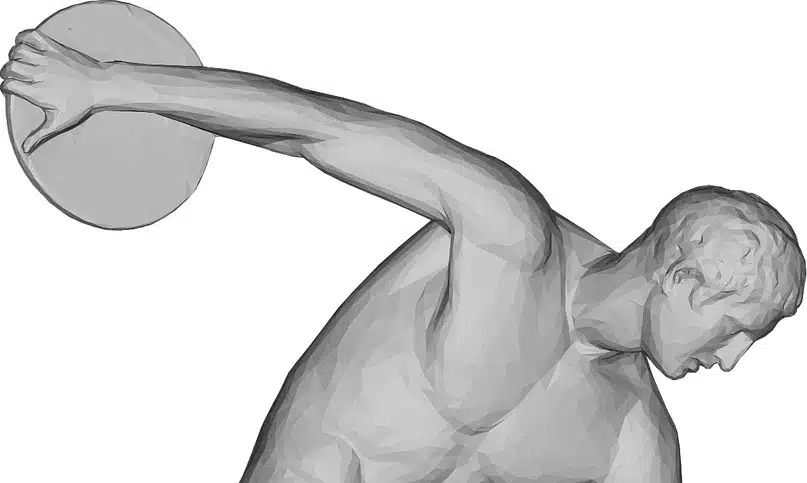
Example: Thousands of spectators gathered in Olympia. - Discus – A heavy round object thrown in a sport.
Example: The athlete threw the discus far into the field. - Chariot – A two-wheeled vehicle pulled by horses, used in ancient races.
Example: Chariot racing was one of the most dangerous Olympic events.
→ Check our lessons on sport vocabulary and Winter Olympic Games vocabulary
3. Classroom Activities for ESL and EFL Students
- Reading Comprehension: Read a short passage about the games and answer questions about who, where, and when.
- Vocabulary Matching: Match ancient sports (wrestling, discus, chariot racing) with pictures or definitions.
- Role Play: Students pretend to be athletes or spectators in ancient Olympia and describe what they see.
- Discussion Questions:
- Why do you think the games were so important in ancient Greece?
- How are the modern Olympic Games similar or different from the ancient ones?
- Writing Task: Write a short diary entry as an athlete competing in Olympia.
→ Here is an example of Ancient Greek Olympic Games classroom activities

Explore More About the Olympic Games
- Ancient Olympic Games – Learn more about their origin and events.
- Modern Olympic Games – Discover how the Olympics were revived in 1896.
- Olympic Games Host Cities – Explore where and how the games are held in modern times.
- Sports Vocabulary – Practice essential sports-related English words.
- Winter Olympic Games – Learn about sports like skiing, ice skating, and snowboarding.
- Quotes about Sport – Famous sayings to inspire athletes and learners alike.
- Idioms about Sport – Expressions like “throw in the towel” or “hit below the belt.”
- Jokes about Sport – Fun language activities for the classroom.
FAQs About the Olympic Games
What are the 4 ancient Olympic Games?
The main sports in the ancient Olympics included running races, wrestling, long jump, and discus/javelin events. Over time, more sports like boxing and chariot racing were added.
What are 5 interesting facts about the ancient Olympics?
1. The first recorded Games were in 776 BC in Olympia, Greece.
2. Only free Greek men could compete, not women or slaves.
3. Athletes competed without clothes to show their physical strength.
4. Winners received olive wreaths, not medals.
5. The Games were part of a religious festival honoring Zeus.
What are the 4 types of Olympics?
Today, the Olympics are divided into four types: Summer Olympics, Winter Olympics, Paralympics, and Youth Olympic Games.
What is the history of the Olympic Games for kids?
The Olympics started in ancient Greece nearly 3,000 years ago. They were held every four years in Olympia to honor Zeus. The Modern Olympic Games began in 1896 and are now celebrated worldwide.
What are the five oldest Olympic sports?
The oldest sports are running, wrestling, boxing, pankration (a mix of boxing and wrestling), and equestrian events like chariot racing.
What do the five Olympic rings represent?
The five rings represent the five continents of the world—Africa, the Americas, Asia, Europe, and Oceania—symbolizing unity through sport.